A trade show is an event where businesses in the same industry gather to exhibit their products and services, meet buyers and partners, demonstrate what they sell and build professional relationships. Most run for a few days in a convention center or exhibition hall, where each participating company, known as an exhibitor, rents floor space for a booth.
The booths are what visitors remember, but the event also depends on people they rarely notice. An organizer sells the space and runs the show, exhibitors bring the products and staff, attendees provide the audience, and registration teams, contractors and venue crews keep everything moving.
Why businesses and visitors go to trade shows
For exhibitors, a trade show puts a product in front of many likely customers at one time and place. A company can show how something works, talk directly with buyers, meet distributors or partners and leave with sales leads, meaning the names of people who want a follow-up conversation.
Attendees have different reasons for making the trip. A buyer can compare competing products side by side in an afternoon, an engineer can ask a product specialist detailed questions, and a newcomer can learn who the major companies are. Many people also come for education sessions and for meetings that are easier to arrange when the whole industry is in one building.
How a trade show comes together
No two shows run in exactly the same way, but most follow a similar sequence. The organizer, the exhibitors, and the venue with its contractors each handle different parts of the work, and our guide to what event staff do covers the roles in more detail.
Before the show
The organizer, often called show management, books the venue, sets the dates, draws the floor plan, sells booth space and arranges registration. Exhibitors receive a manual of rules, deadlines and services, then prepare their displays and staff.
Setup and load-in
Load-in is when freight arrives and an empty hall becomes a show floor. A general service contractor often moves freight and lays carpet, while AV crews set up sound and screens. Venue rules and labor agreements decide who may do what, so some work has to go through approved contractors, and guest-facing workers do not automatically take on security duties, electrical work or rigging.
Show days
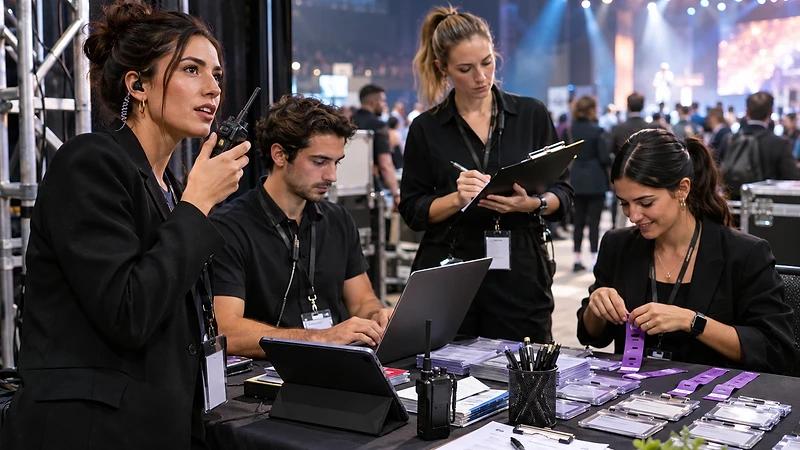
Registration and guest-services teams check attendees in and issue badges. On the floor, exhibitors’ sales and product specialists demonstrate products and hold meetings, sometimes with booth ambassadors greeting visitors. Details of interested visitors are recorded for follow-up, a step known as lead capture.
Breakdown and follow-up
Breakdown, also called load-out, usually starts soon after closing. Exhibitors pack their materials, contractors remove freight and carpet, and the hall is cleared by a set deadline. Follow-up takes longer, and a sale that began at a show may not close for months.
What attending a trade show is like
Expect a large room and a lot of walking. An exhibition hall is usually laid out in numbered aisles, with a map or show app to help you find specific companies, and a small booth with a table and a banner may sit near a large exhibit with its own meeting rooms or stage. Most visitors wear a badge, and exhibitors may ask to scan it if you want information sent to you afterward.
A typical visit mixes planned stops with chance finds. You might watch a product demonstration, handle samples, sit down for a scheduled meeting, attend an educational session or speaker presentation, or talk with people in your field at a reception. What is on offer depends on the event, since not every show has keynotes or live demonstrations, and many exhibitors take orders or start conversations instead of selling products on the spot.
Types of trade shows
Trade shows are one format in our overview of event types, and they differ most in who is allowed through the door. Industry-only shows limit attendance to people who work in the field, and CES describes itself as a trade-only event for people 18 or older tied to the consumer technology industry. Consumer-facing shows, such as home and garden shows, sell tickets to the public, and exhibitors often sell directly to visitors. Mixed-audience events welcome both groups, as the Frankfurt Book Fair does with trade and private visitors.
The labels themselves are not fixed. Expo, exhibition, trade fair and trade show are often used interchangeably, so check an event’s registration page to find out whether you can attend.
An example of a company exhibiting
Consider an illustrative case: a manufacturer of commercial kitchen equipment introducing a new oven at a restaurant industry exhibition. Before the show, its marketing team reserves a booth and ships the display, its product specialists plan a short demonstration, and its sales team invites existing customers to book time at the booth.
Once the show opens, a hired booth ambassador welcomes people passing by and points serious visitors toward a specialist. A restaurant owner might watch the demonstration, ask a few questions and have their badge scanned so a sales representative can call later. When the show closes, the display goes back to the factory, and the sales team spends the following weeks finding out which conversations were serious.