- Covers
- Guests, staff, vendors and media
- Tools
- Tickets, wristbands, badges and checkpoints
- Planning guidance
- CISA's public venue credentialing guide
Four jobs that often get mixed up
Access control connects several roles, and each has a narrower job than the whole system. Venues and organizers divide the work differently, but these four tasks appear at most large events:
- Entry permissions: the rules set before the event about who may go where, such as floor seats, suites or backstage.
- Ticket checking: entrance staff scan or check tickets and confirm that the ticket type matches the area.
- Ushering: ushers seat guests and keep restricted sections clear, but they usually do not screen bags or remove guests.
- Security: event security handles screening and incidents at checkpoints, and in some states it is licensed work.
Access control vs event credential
An event credential is one tool in the system: the badge or wristband that shows a person is cleared for certain areas. Access control is the wider plan, and CISA's public venue credentialing guide describes credentialing as an access control process for people who need to enter or move within a venue.
Event access control example
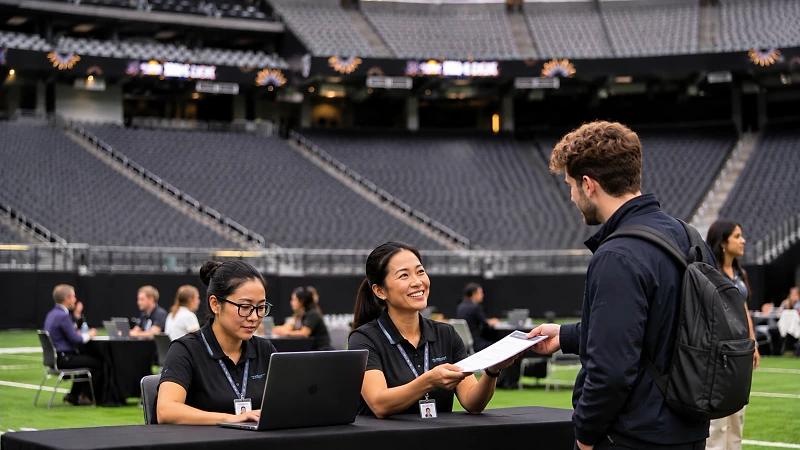
At an arena concert, gate staff scan guest tickets and send floor ticket holders to a separate entrance, ushers check wristbands at the floor portals, and security screens bags and checks staff credentials at the loading dock. Our guide to working at stadiums and arenas explains how these posts are assigned.
Common mistakes
Waving someone through who looks like staff Check the ticket or credential every time. Access control only works if each checkpoint applies the same rules.
Assuming every door post is security Ticket takers and ushers usually have different duties and training from security staff, so send problems to the right person.