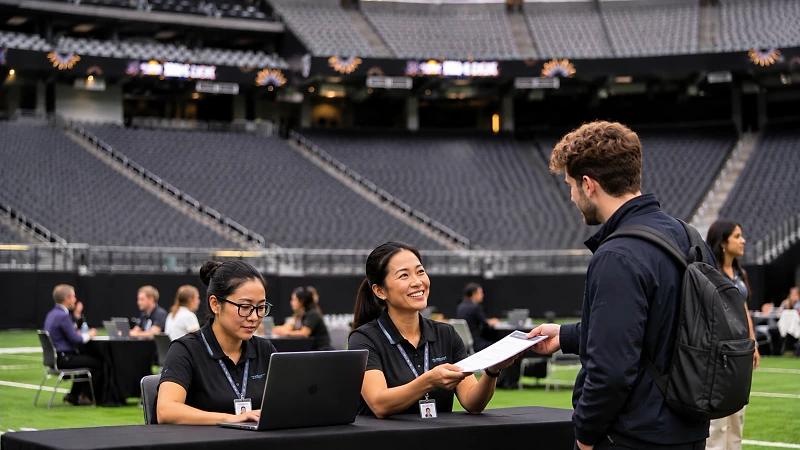
Working at a stadium can mean a post at a gate on the far side of the building, a ramp between seating levels or a concourse that runs the length of the field, and getting there from staff check-in can take real time on foot. At an arena, the building is more compact and usually enclosed, so the job is more often a fixed section, seating portal or concourse post where you see the same rows of guests from doors to the final exit. Both are large public venues, but the shape of the building changes how a shift feels.
Working at an arena or a stadium also means working to the event's schedule, so the start time, crowd size and floor layout can change from one night to the next, and your assignment changes with them. This guide covers what the two venue types share, where they differ and how a shift runs from check-in to closeout.
What Working at Stadiums and Arenas Is Like
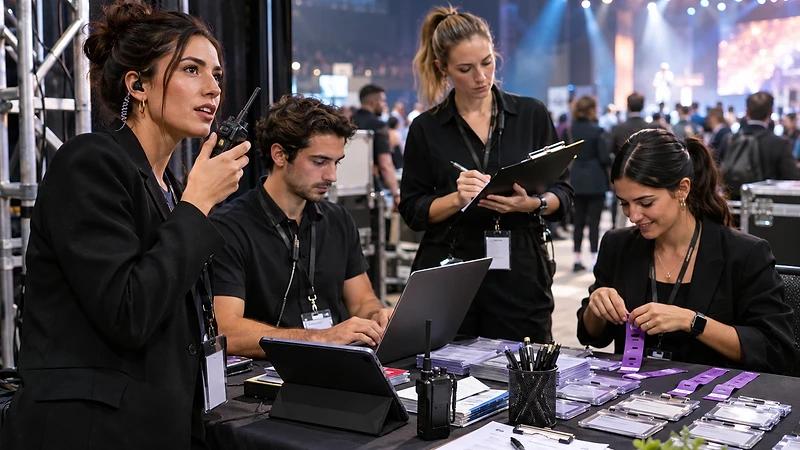
Most large venues run event staff through the same basic routine. You report where your employer tells you at your call time, often a staff or employee entrance, then check in and show or collect a credential, the badge that lets you into the building and the areas your job covers. A supervisor or lead then runs a pre-event briefing on the event, any changes to entry or seating and how to reach them during the shift.
From there you go to an assigned post, such as a gate, a seating section, a concourse or a guest services stand. Most shifts are shaped by three moments: the arrival rush when doors open, the stretch while the event is running and the exit, when thousands of guests leave in a short window. Staff usually stay at their post until a supervisor releases them, and details such as radio use and break timing are set by each venue and employer. Our guide to what event staff do covers the duties of each role, and the On the shift guides cover working a shift in more depth.
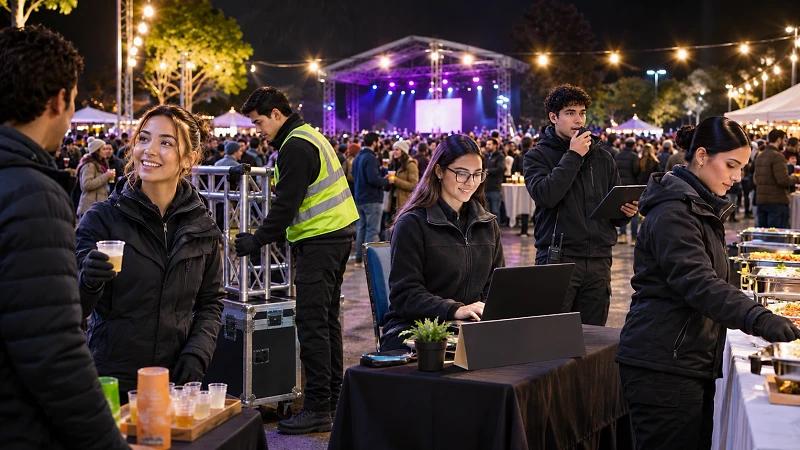
Where the two differ most is scale. Stadium posts are spread across many gates, long concourses and levels, and many are outdoors, so a 2026 guest services posting at the Cleveland Browns' stadium asks for staff comfortable working in all weather conditions, and OSHA's heat guidance stresses water, rest and shade. Arenas are mostly indoors, where ushers and guest services staff often keep one section for the whole event while the floor and access rules change between games and concerts. Both are physically demanding: a 2026 arena guest services posting in Tampa asks for staff who can stand for extended periods, walk long distances and climb stairs, and NIOSH treats sustained noise at 85 decibels or more as hazardous.
Stadium vs Arena Work: Key Differences
| Stadium | Arena | |
|---|---|---|
| Work environment | Often outdoors or partly covered, with some posts exposed to weather | Mostly indoors |
| Venue layout | Large site with many gates, long concourses and several levels | Compact bowl with fewer entrances and shorter walks |
| Typical event formats | Football, baseball, soccer and large concerts | Basketball, hockey, concerts, family shows and other performances |
| Assigned areas | Gates, plazas, concourses and sections spread over a wide area | Sections, portals and concourse posts close together |
| Peak guest periods | Large arrival waves before the start and a concentrated exit | Arrival before the start, plus surges at breaks and intermissions |
| Physical demands | Long walks, stairs, standing and weather exposure | Long periods of standing, stairs in the bowl and sustained noise |
| Practical preparation | Weather layers your dress code allows and a plan for getting home | Comfortable shoes and hearing protection where permitted |
What a Stadium or Arena Shift Looks Like
The order of a shift is the same at both venue types, but each stage plays out differently. The cards show the six stages, each with a stadium note and an arena note.
Check-in
Report where your employer tells you and show your credential.
Stadium: The staff entrance can be a long walk from your post.
Arena: Reporting points vary by venue, so follow your check-in instructions.
Briefing
Event details, changes to your area and who to contact.
Stadium: Gate staff get the entry rules for their gates.
Arena: The floor setup and any sections that open or close.
Assigned post
Move to your gate, section or concourse area before doors.
Stadium: Allow extra time for outer gates or upper levels.
Arena: Usually a section, portal or concourse area.
Guest arrival
Greet and direct guests, or scan tickets if you are on a gate.
Stadium: A large wave through several gates before the start.
Arena: A build toward the start time through fewer entrances.
Event operations
Help late arrivals, answer questions and watch your area.
Stadium: Weather and long concourses shape the middle of the shift.
Arena: Breaks in play and intermissions bring concourse rushes.
Closeout
Support the exit and stay until a supervisor releases you.
Stadium: A concentrated exit across a large site.
Arena: Clearing sections and concourses before close.
Two habits help at either venue. Check the briefing for anything that changes your post, such as a closed section or a new entry gate, and keep your supervisor's contact or radio channel handy, because posts can move during the event. At closeout, wait to be released rather than leaving when the crowd thins, since exit support and clearing sections are part of the job.
Which Venue Is Better for You?
Neither venue is easier as a rule, and the better fit depends on the conditions you work best in. Think about how you handle weather, noise and long stretches on your feet, and whether you would rather cover a wide area or settle into one section.
Schedules depend on each venue's calendar: a stadium may host fewer, larger events in its main season, while an arena with several tenants and touring shows may hold events on more nights across the year. Assignments matter too, since gate, section and guest services posts call on different strengths, and some employers try to match staff to the posts they handle well.
More guides on stadium, festival and other event types cover how other settings compare. When you are ready to apply, our guide to arena and stadium jobs explains who hires for each role and how to get started.