- Formula
- Quits ÷ employment × 100
- Published by
- U.S. Bureau of Labor Statistics, in JOLTS
- How often
- Monthly; the newest month is preliminary
- Leisure and hospitality
- 4.4% (September 2026, preliminary)
- All industries
- 2.1% (September 2026, preliminary)
- Leaves out
- Layoffs, firings, retirements, transfers
- State figures
- All industries combined, not by industry
Key characteristics
Voluntary exits only Someone who resigns counts. Someone who is laid off, fired or retires does not.
A rate, not a headcount Quits are divided by employment, so big and small industries compare fairly.
Monthly and revised The newest month is a first estimate and is revised the following month.
A read on worker confidence People quit more when they believe they can find something better.
Quits rate vs related terms
What the quits rate measures
Picture a banquet team of 100 people. If three of them hand in their notice this month, that team’s quits rate is 3%. That’s the whole idea.
The national version works the same way, just bigger. The U.S. Bureau of Labor Statistics (BLS) counts how many people left their jobs on purpose during the month. It divides that by the number of people employed, then multiplies by 100. The numbers come from its monthly JOLTS survey of about 21,000 employers.
The key word is voluntary. A quit is the worker’s choice. Anything the employer decides, or anything that isn’t really leaving, goes in a different bucket.
Why the number matters to you
People usually quit when they feel sure they can land something better. So a high quits rate tends to mean workers have options. A low one tends to mean people are holding on to what they have.
- If you work events: a high quits rate in your industry is a sign employers need you. That’s a good moment to ask for a better rate, more shifts or the hours you want.
- If you book event staff: a high quits rate means more turnover. Expect more new faces, more training and more gaps to fill close to the date.
That’s the general signal. The next question is how hospitality compares with everyone else.
Hospitality vs. every other industry
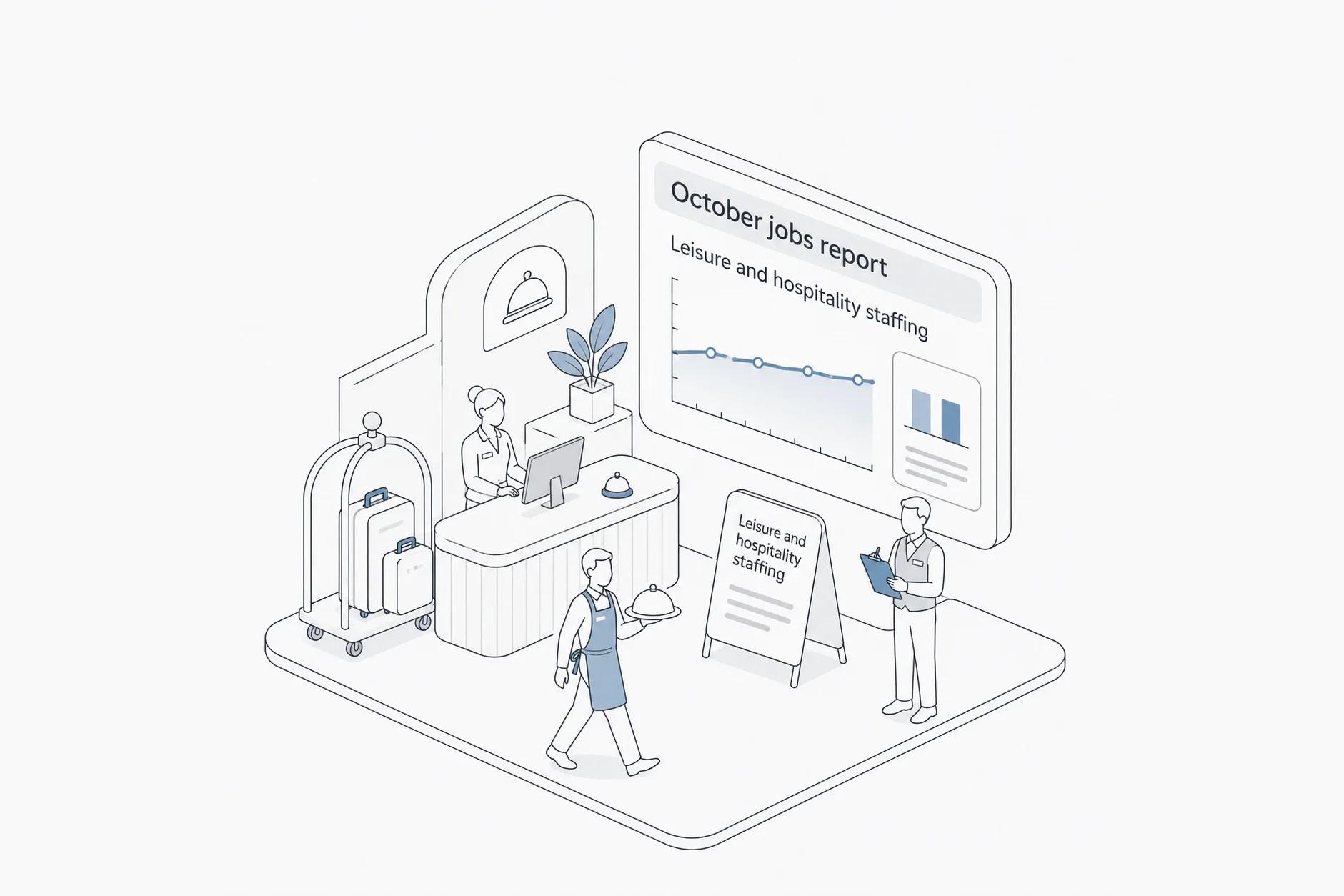
Leisure and hospitality covers hotels, restaurants, bars, arts, entertainment and recreation. Its quits rate runs well above the average for all industries. In September 2026, it was 4.4%, more than double the 2.1% rate across all industries. Both September figures are preliminary.
The rate moves around from month to month. Here is how it went in 2026.
- Mar3.8%
- Apr3.7%
- May3.9%
- Jun3.9%
- Jul3.5%
- Aug3.4%
- Sep (p)4.4%
Source: Job Openings and Labor Turnover Survey news releases (August, September and November 2026) · As of Nov 2026
September’s jump came almost entirely from accommodation and food services, where the rate rose from 3.6% to 5.0%. Arts, entertainment and recreation went the other way, falling from 2.0% to 1.2%. A year earlier, in September 2025, the leisure and hospitality rate was 3.0%.
Why hospitality runs high
A few things push hospitality quits up. Most of the work is hourly, shifts change week to week, and the skills travel well: a good banquet server or bartender can walk into the hotel across the street and start the same week.
One thing that doesn’t inflate it: seasonal jobs ending. When a season wraps and the employer lets people go, BLS counts that as a layoff, not a quit. So the high rate really is people choosing to leave.
Can you see your state’s quits rate?
Yes, with one catch. BLS also publishes state JOLTS estimates, including quits for each state. But those state figures cover all industries combined. There is no official state-level quits rate for hospitality alone.
So if you want a local read, compare your state’s overall quits rate with the national one. If your state runs above the national average, expect workers to have more options there too.
How to use it if you book or employ event staff
You can’t change the national number. You can change how much of it lands on your events.
- Track your own rate Divide the people who quit in a month by your average headcount, then multiply by 100. Compare it with the leisure and hospitality figure.
- Rebook your best people first Offer next season’s dates to your strongest staff before you post them anywhere else.
- Keep a standby pool When quits run high, more people drop off before an event. A list of standby staff covers the gaps.
- Check your pay each season If your quits rate is above your industry’s, pay and hours are the first things to look at.
How to use it if you’re the one working
When quits are high, employers are competing for people. That gives you room to compare offers and to ask for what you want. When quits drop, jobs get harder to find, so it pays to hang on to good regular gigs.
Just remember it’s a national average. Your city, your role and the time of year matter more for your next shift.
Common questions
Best practices
Compare like with like Measure your own quits rate against your industry’s, not against the all-industry average.
Watch three months, not one A three-month view smooths out preliminary numbers and one-off swings.
Common mistakes
Counting layoffs as quits Layoffs, firings and seasonal jobs ending are separate. Mixing them in makes turnover look voluntary when it isn’t.
Reading one month as a trend The newest month is preliminary and the rate swings. Look at several months before you draw a conclusion.
Treating hospitality as events Leisure and hospitality includes restaurants, hotels, gyms and casinos. Events are only a slice of it.
Looking for a hospitality rate by state State JOLTS figures cover all industries combined. There is no official state rate for hospitality alone.