Kansas City’s World Cup leaned on 3,400 volunteers. Most job postings were for managers
KC2026’s Nov. 17 impact report counts about 80,000 volunteer hours and concedes the gains were uneven. Chmura found more than half of World Cup job postings were management, business or finance roles. What that means for LA28 hiring.
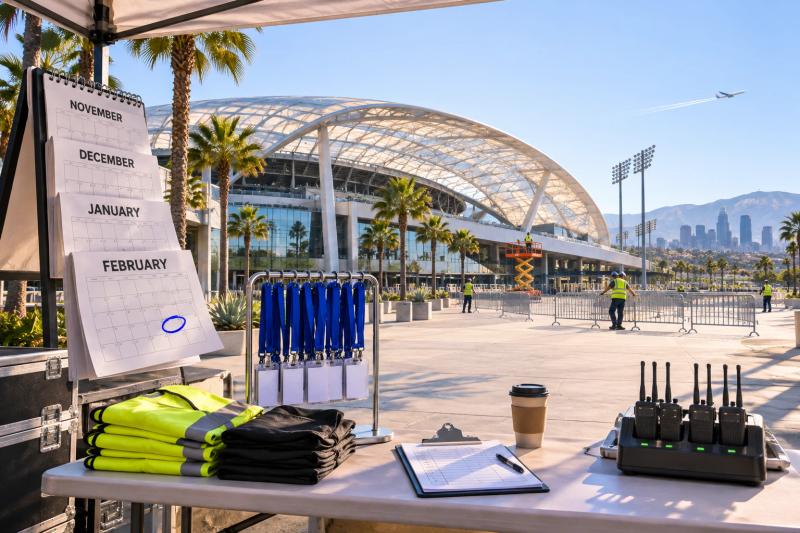
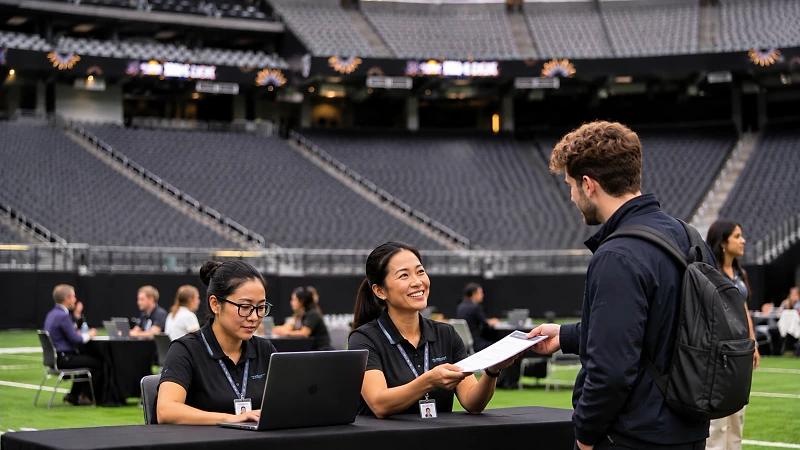
Kansas City’s World Cup leaned on about 3,400 volunteers, chosen from more than 16,000 applicants, who worked roughly 80,000 hours across about 15,000 shifts, according to the impact report that host committee KC2026 released on Nov. 17. One of the report’s seven lessons is that economic opportunity was not evenly distributed. “Not every business or community benefited equally,” KC2026 CEO Pam Kramer said, KCTV5 reported.
Jims Desauguste’s restaurant was one that did not. He added special lunch hours and an automatic 18% gratuity at Black Garlic in Kansas City for the World Cup. He expected a rush. “We barely served like 10 or 20 people a day,” he told KSHB. Revenue could not cover payroll, he said, so he laid off staff. The gratuity is gone, and he says his online rating fell from about 4.5 to 4.1.
He is one owner in one city. A wider count of who got the tournament’s jobs comes from Chmura Economics & Analytics. It reviewed postings that named FIFA or the World Cup in the 11 U.S. host cities and found that management, business and financial occupations made up more than 50% of them. Food service and sales made up fewer than 15%.
Those are postings, not hires, and volunteer shifts are neither. But the gap matters for the next two mega-events. FIFA projected 185,000 jobs, and LA28 and Super Bowl LXI arrive with their own jobs pitches. For hourly workers, the question is which postings are theirs, and who is hiring.
Projected, posted, counted
FIFA’s number comes from a study it released with the World Tourism Organization in April 2025. OpenEconomics, which built the model, estimated that 185,000 full-time-equivalent jobs “could be created” in the U.S. by the 2026 World Cup. That is a model of national economic contribution. Chmura says it does not describe 185,000 hires in host cities or 185,000 advertised openings.
In New York and New Jersey, the host committee’s final report put the impact at $3.5 billion against a $3.3 billion forecast, and said the tournament supported 27,424 full- and part-time jobs, nearly 18,000 of them direct, per Fortune. “Supported” is a modelled count, not new hires, and the report is the host committee’s own.
| Figure | What it counts | Who produced it |
|---|---|---|
| 185,000 | Full-time-equivalent U.S. jobs the tournament could create, modelled | FIFA-WTO study, OpenEconomics, April 2025 |
| 27,424 | Jobs supported in New York and New Jersey, modelled; nearly 18,000 direct | Host committee report, Tourism Economics, Aug. 26, 2026 |
| 50%+ and <15% | Share of World Cup-naming postings in 11 host cities, by occupation group | Chmura, July 28, 2026 |
| -54,000 and -38,000 | National change in leisure and hospitality jobs, June and July | Bureau of Labor Statistics, current estimates (first reported as -61,000 and -40,000) |
| 80% | Share of 205 surveyed hotel operators and owners in host markets who said bookings were tracking below forecast, in early May, before the first match | American Hotel & Lodging Association survey |
Did the crowds show up?
Chmura’s own caveat applies to its count: it misses hiring that never mentions the tournament, such as restaurants adding servers or hotels adding hours.
The case that it delivered
The case that it fell short
“The biggest black eye” in a lackluster June jobs report.
That is the national picture. In May, Hotel Association of New York City CEO Vijay Dandapani said bookings were up “a maximum of 10 percent” and nearly half of hotels had seen no World Cup business yet, Newsweek reported.
What it means for hourly workers
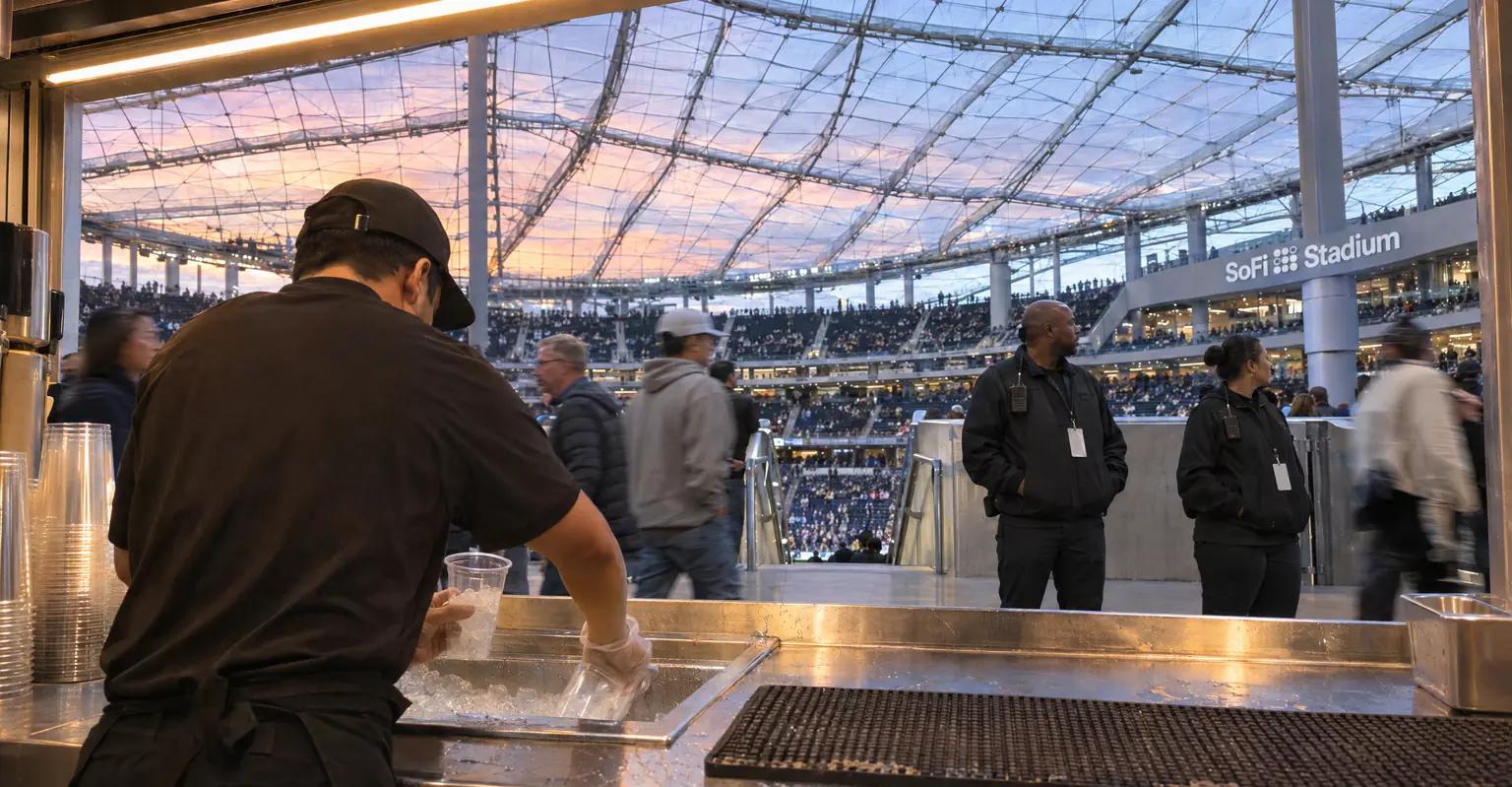
Chmura counted only postings that named the tournament. Concession stands, stadium bars and security posts often hire through venue caterers, contractors and staffing agencies, whose ads may never say FIFA. If so, some hourly hiring happened outside the count. It also means a worker could not have found it by searching the tournament’s name.
- Concessions
Who is the venue’s concessionaire, and when does it hire? Its postings may never carry the event’s name.
- Bartenders
Are the hours guaranteed, or do they follow the crowd? Black Garlic laid off staff when lunch crowds did not arrive.
- Event security
Which contractor hires for the venue, and is training and credential time paid?
Three checks for the next mega-event staffing plan:
- Read “jobs supported” as a model. Ask venue contractors for posting and hiring counts, not an economic-impact figure.
- Staff to confirmed bookings. The AHLA survey found hotels trailing forecasts before the first match.
- Write the cutback rule in advance. Decide how hours shrink if crowds fall short, so staff are not laid off mid-event.
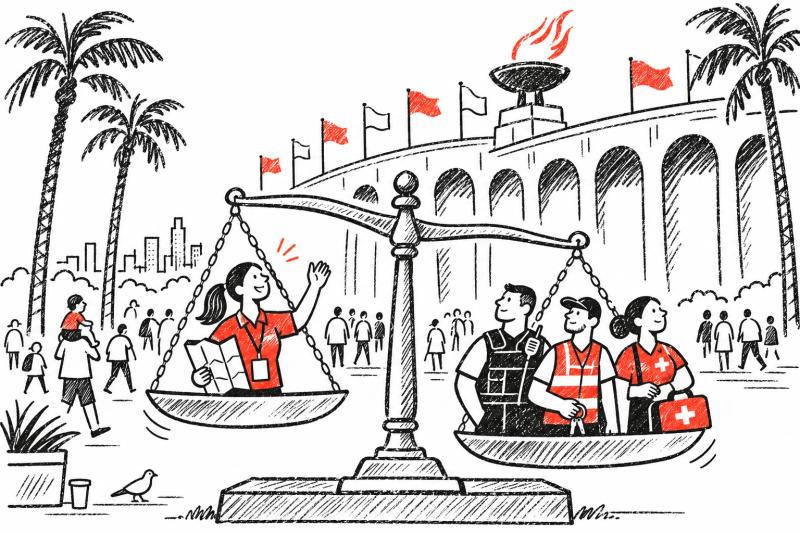
The same pitch is out for the next two. LA28 is asking for about 60,000 unpaid volunteers while its own workforce numbers nearly 5,000, we reported. For Super Bowl LXI, the only calls for workers when we looked came from small nonprofits.