84% of hotel survey respondents say AI improved their work. Only 15% say it improved frontline work
An AHLA and Actabl report pairs the survey with a 3.1% to 3.5% drop in hotel labor hours per occupied room. Neither source says AI caused it, and only housekeeping is broken out.
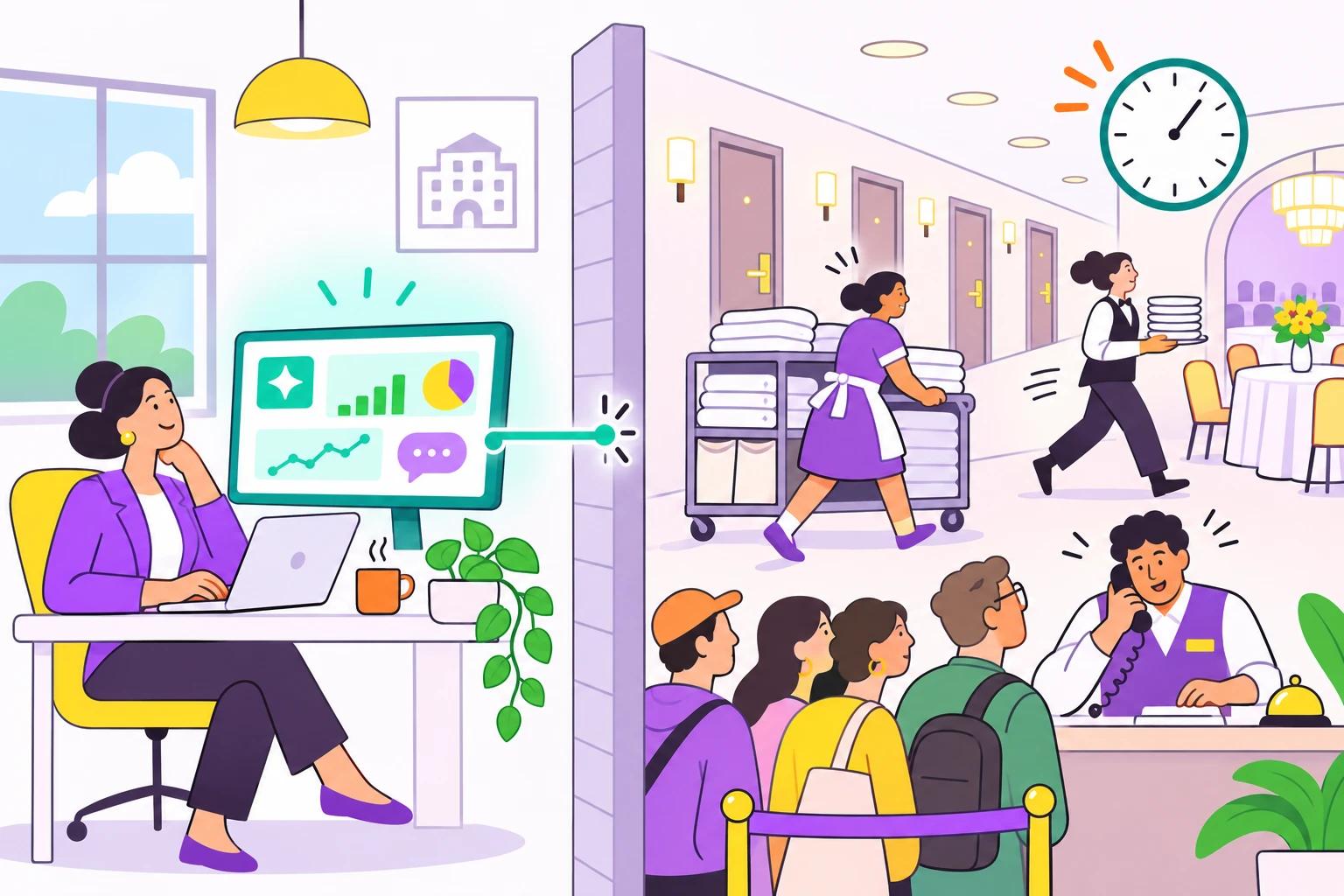
84% of respondents in a new hotel industry survey say AI has improved their own work. Only 15% say it has improved frontline work. Those are the headline numbers in "AI and the Hotel Workforce," a report from the American Hotel & Lodging Association (AHLA) and software company Actabl, released Nov. 4 at The Hospitality Show in Miami Beach.
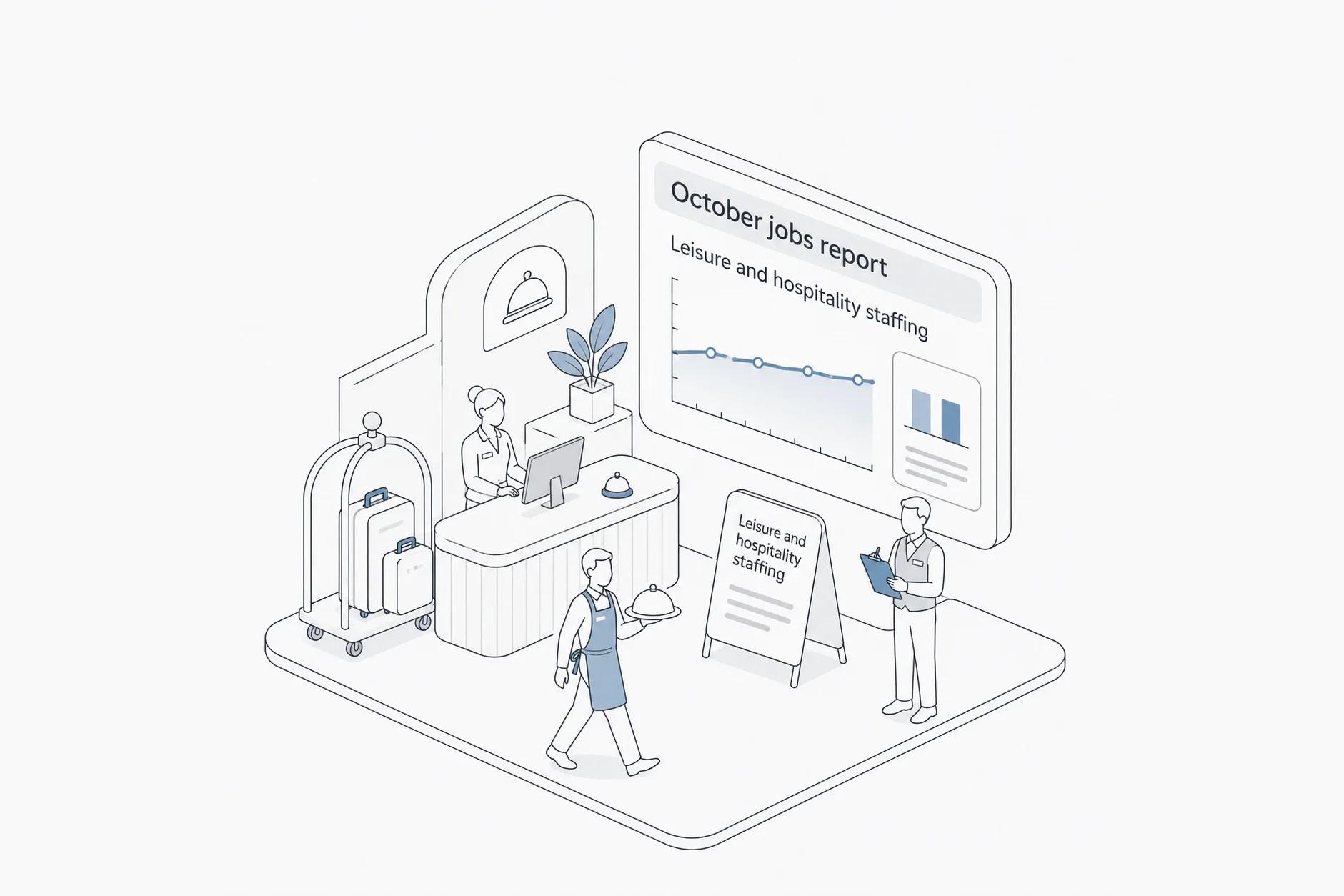
The report also leans on labor data. In the first half of 2026, hotels on Actabl's labor tool used 3.1% fewer hours per occupied room in full-service properties and 3.5% fewer in select-service ones, while occupancy rose 1.1 points, according to HotelData.com. Neither source says AI caused the drop. The survey and the hours sit side by side; no figure we found links them.
Read the limits first. The 15% is respondents' view of frontline work, not a poll of frontline workers. MarketScale reported no sample size, method or field dates, and we found none. The hours data covers hotels that use Actabl's Hotel Effectiveness tool, about 5,000 U.S. hotels. Actabl sells that tool and co-wrote the report.
Two numbers from two kinds of evidence
The 84% and the 15% measure how people feel about AI. Hours per occupied room, known as HPOR, measures labor. In the summaries we read, AHLA and Actabl tie the hours decline to "tighter staffing alignment," not to AI by name. A hotel can cut HPOR by scheduling to its forecast, with no new technology at all.
The gap is not unique to hotels. BCG's June 2026 "AI at Work" survey of 11,749 respondents found 42% of frontline staff save a workday a week with AI, against 52% of managers and 60% of leaders. Different industry, same direction: the further from the floor, the bigger the reported gain.
The hotel report's answer is more tools aimed at the front line. Coverage by Hospitality Net says it points to software that finds approved procedures, supports onboarding and training, flags exceptions and coordinates work across departments. Nothing we read shows those tools are in use on the floor yet.
AI doesn't replace what makes our industry special.
What hours per occupied room measures
HPOR is total labor hours divided by occupied rooms. It falls when schedules track demand, when more rooms fill with the same crew, or when a task takes less time. The figure alone cannot say which. Occupancy rose in the first half, so part of the drop may be rooms filling faster than staffing grew.
The trend is also cooling. Select-service hotels cut 5.1% in the first quarter and 1.8% in the second; full-service went from 3.7% to 2.5%. Sarah McCay Tams of Actabl told HotelData.com the second-half question is "whether hotels can hold the productivity baseline."
The money side moved the other way. HotelData.com found hourly pay up 2.9% to 3.3% across the roles it tracks and gross operating profit margin up 3.6 points. Hotels did more with fewer hours per room, paid more per hour and kept more of each dollar. That is a productivity story, but the sources do not say who gained from it or how much of it came from technology.
Only housekeeping is itemized, and there the cut is largest in select-service hotels.
| Role | Hotel type | Change | Minutes per occupied room |
|---|---|---|---|
| Room attendants | Select-service | -5.0% | 24.01 to 22.82 |
| Room attendants | Full-service | -2.7% | Not reported |
| Housepersons | Full-service | -2.7% | Not reported |
| Front desk | Any | Not reported | Not reported |
| Food and beverage | Any | Not reported | Not reported |
| Banquets and events | Any | Not reported | Not reported |
What it means for banquet and event workers
This section is our analysis, not reported findings.
Nothing in the report or the HotelData.com figures covers banquets, food and beverage or on-call agency labor, and we found no union response to the report. What we can say is where a tighter schedule would matter. Group business is the part of a hotel that runs on banquet crews, and our coverage of Hilton's third-quarter results showed group revenue per room up 8.2%. A hotel staffing close to its forecast has less slack when a group day runs heavy, and the gap tends to land on the people called in late. That is a reasoned guess, not a reported result.
Turnover points the other way. If fewer hotel workers are leaving, fewer jobs open up, which could matter to people who pick up hotel shifts. We have not seen data that says so. Our earlier reporting found that keeping people, not hiring faster, limits event staffing. Hotel labor is also a live issue elsewhere, as in the Chicago hotel strike.
The open question is the one the data leaves blank: how banquet and event labor figures into the hours that fell. Until AHLA or Actabl says, read the decline as a housekeeping finding. Event workers can browse banquet and catering shifts on the Jobs board.