Live Nation’s record quarter put 61 million fans in seats. Someone had to work them
Live Nation reported $10.1 billion in Q3 revenue, with September its biggest amphitheater month ever. Behind those crowds are seasonal gate, security, food and production crews, and 10 new venues are on the way.
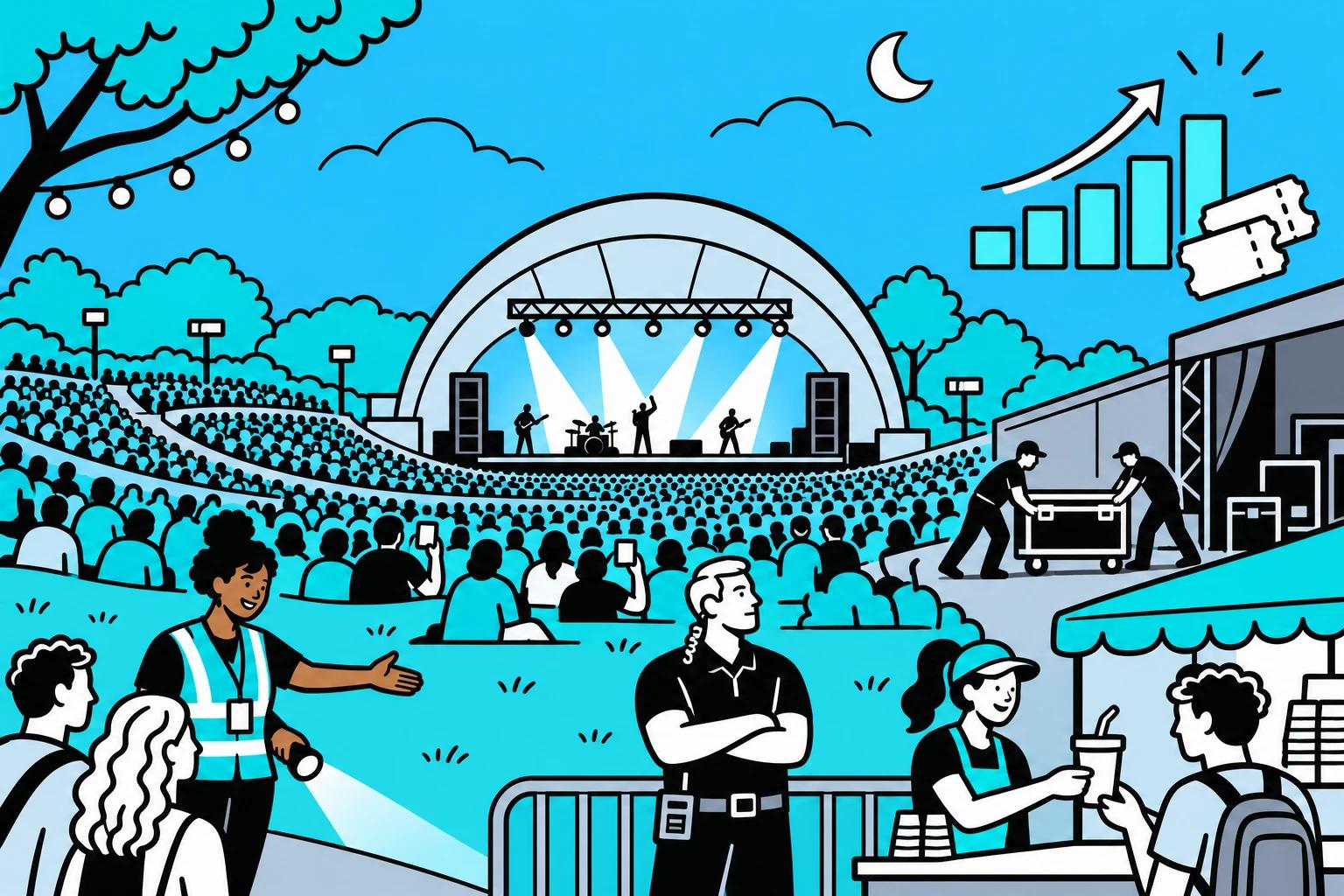
Live Nation took in $10.1 billion in third-quarter revenue, up 19%, as 61 million fans came through its shows, the company said in its Nov. 5 earnings release. September was its busiest amphitheater month on record. Every one of those fans walked past an usher, a security check and a concession line.
That is the staffing story inside the earnings story. More fans over more event days means more gate, security, food and beverage, box office and production shifts. Live Nation did not discuss labor costs in the release or the call excerpt we reviewed, so the crew read below is our analysis, and we label it that way.
September broke the amphitheater record
Venue Nation, the company’s venue arm, hosted 26 million fans in the quarter, up 17%. It now expects more than 75 million fans across 2026, up more than 15%. September was the all-time high for amphitheater attendance and number of shows in a single month, the release said, so the season ran at full strength well after Labor Day.
Concerts brought in $8.75 billion of the quarter’s revenue, up 20%. Ticketing added $870 million, up 9%, and sponsorship $506 million, up 14%. Fee-bearing Ticketmaster tickets reached 98 million in the quarter, up 10%.
Keep the periods straight. The $10.1 billion is third-quarter revenue. The 170 million tickets were sold through October for 2026 shows. They are not attendance, and they are not Q3 sales. Live Nation now expects 2026 attendance to approach 180 million fans.
The geography matters for where the work lands. International attendance grew 29% and made up about 60% of fan growth, according to New Industry Focus. For U.S. event workers, the 13% gain in North America is the number that maps to local shifts. The company’s 10-Q says all three of its business segments grew adjusted operating income by double digits, so the record did not rest on one line.
What the volume means for venue crews
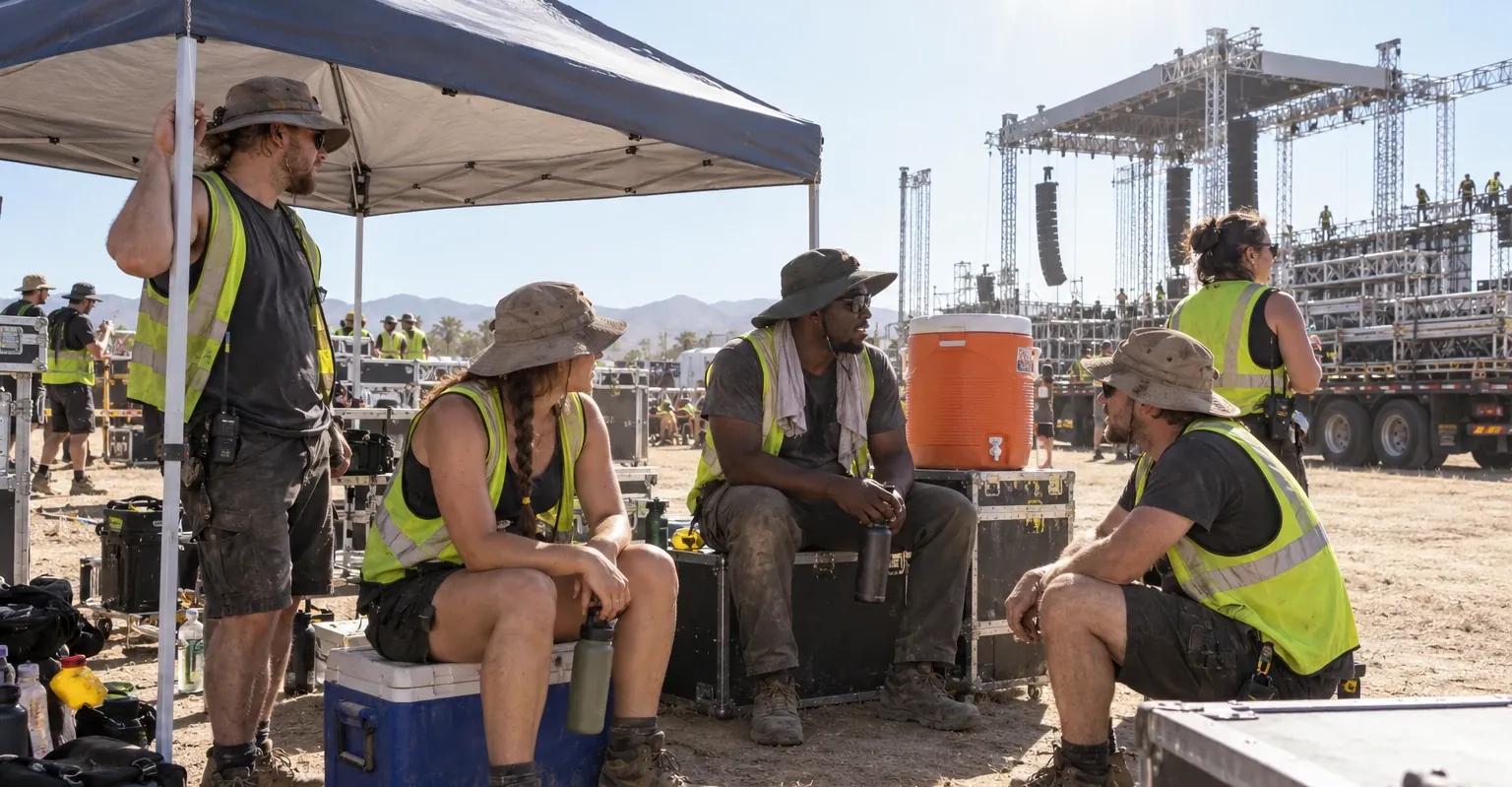
This section is our analysis, not company guidance. A record September is a scheduling story as well as an attendance story. More shows in a month means more call times, and each show needs the same core crew. The roles that scale with crowd size are ushers and gate staff, event security, concessions and bar, box office, and the stagehands who handle load-in and load-out.
Amphitheaters are seasonal, so that work stacks up between late spring and early fall. A record September stretches the tail of the season. Workers who rely on venue shifts get more hours in a strong year. Venues that staff by the season have to hold on to their crews longer, which is the retention problem we covered in our piece on the event staffing shortage.
Premium service is a second lever. The release said upgrade and VIP revenue per amphitheater ticket rose by double digits and that value-menu unit sales more than doubled. If fans spend more per head, bars and food counters run busier. That points to more bar, food and VIP-host shifts, though Live Nation did not say how it staffs them.
New buildings are the third. A venue needs a full crew before its first show: gate, security, concessions, box office and stage. Ten new large venues means ten new local hiring pools. Our guide to arena, stadium and convention center jobs explains who hires for these buildings and how to get on a crew.
If you work venue shifts, update your availability for late-season shows and keep security or alcohol-service credentials current. If you book crews for a concert or festival, expect your dates to compete with amphitheater and stadium schedules for the same people. Book early, and see what a job on an event crew involves before you write the posting.