Ultra bartenders sue for over $1.5 million, saying theft claims cost them their pay
The 22 workers say the festival's operators invented inventory shortages to hold back their March wages; Ultra says it never employed them. Federal law limits when a shortage can come out of a paycheck.
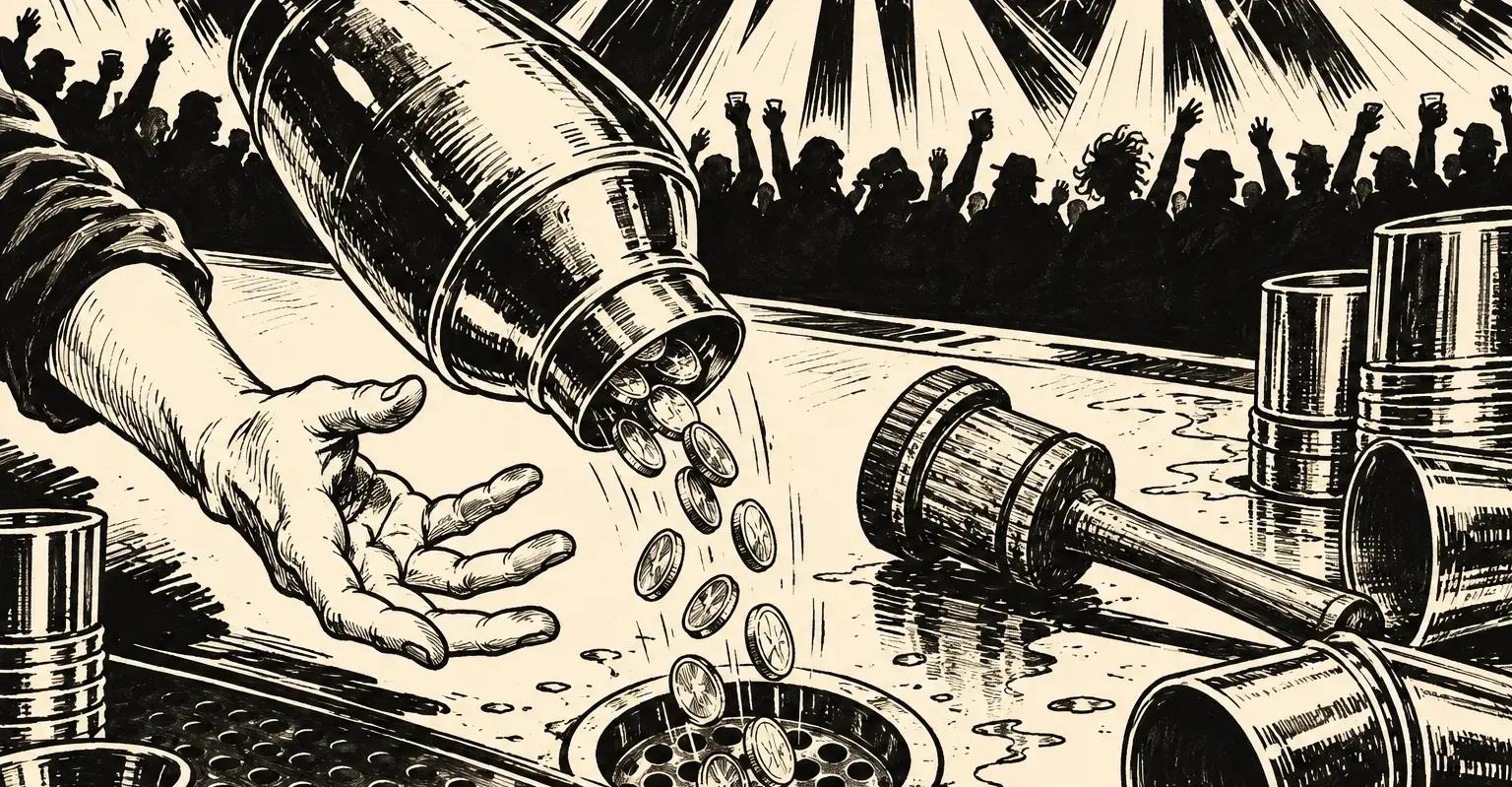
The bartenders who ran drink booths at Ultra Music Festival in Miami this March say they were accused of theft instead of being paid. Twenty-two of them are now suing the festival's operators for more than $1.5 million, alleging the companies fabricated inventory shortages to justify withholding their wages, Miami New Times reported on Oct. 9.
The case turns on two questions every festival bar crew should ask before a shift: who is the employer, and can missing stock come out of your pay? Everything below about the case is an allegation. No court has ruled, and Ultra says the bartenders sued the wrong companies.
What the bartenders say happened
According to New Times, the operators hired dozens of bartenders to run drink booths across the three festival days. The lawsuit says the operators then accused the workers of stealing, fabricated inventory shortages to back the accusation, and ran a "sham internal investigation to justify withholding earned pay and to deter complaints." It also says the operators shared the theft accusations with third parties, whom it does not name.
The Ultra Music Festival is one of the largest electronic-music festivals in the world, generating substantial revenue for its operators. Yet the workers who poured the drinks and ran the beverage stands at the 2026 festival were not paid the wages they earned
The complaint first named 13 bartenders. It was filed as a class action so other workers could join, and nine more have, bringing the group to 22. The $1.5 million is what the workers are asking for, not an amount a court has awarded.
Ultra says the workers sued the wrong parties
The suit names Ultra Enterprises Inc. and Event Entertainment Group. On Sept. 24, the defendants filed a motion to dismiss the workers' first amended class action complaint, New Times reported.
Ray Martinez, Ultra's chief administrative officer, said in a statement: "Event Entertainment Group, Inc. has been clear from the outset that these claims have been directed at the wrong parties. The individuals involved were never hired or employed by Event Entertainment Group, Inc. or any of its affiliates, and neither was responsible for their compensation."
Martinez also said the plaintiffs acknowledge, as the motion to dismiss outlines, that they were recruited and engaged by a third-party contractor. The New Times report does not name that contractor. As of Oct. 29, no ruling or hearing date on the motion had been reported.
How the dispute unfolded
What federal law says about shortage deductions
The Department of Labor's Fact Sheet #2 on restaurants under the Fair Labor Standards Act sets the federal floor. It says deductions for items such as cash shortages, required uniforms or customer walkouts are illegal if they reduce pay below the minimum wage or cut into overtime pay.
That is a floor, not a blanket ban. Under that test, a deduction that leaves a worker with less than the minimum wage for the hours worked is not allowed.
Tipped bartenders get a stricter rule. When an employer counts tips toward the minimum wage, known as a tip credit, Fact Sheet #15 says deductions for walkouts, breakage or cash register shortages are illegal "because any such deduction would reduce the tipped employee's wages below the minimum wage." The same fact sheet says employers may not keep any part of workers' tips, whether directly or through a tip pool.
Florida's minimum wage is $15 an hour
The suit was filed in Florida, where the state minimum wage has been $15.00 an hour since Sept. 30, 2026, according to FloridaCommerce. That rate runs through Dec. 31, 2027. The federal minimum wage is $7.25.
States can set their own limits on deductions, so check your state labor agency's rules before you sign a shortage policy.
What to confirm before a festival bar shift
Before the first pour, find out who your employer is and who counts the bottles.
For teams hiring bar crews, written pay terms, a clear count process and a named employer protect the event as much as the staff.
Not the first pay dispute at Ultra
In May 2024, Miami New Times reported that food truck operators who worked Ultra that March said a California subcontractor, Best Beverage Catering, had not paid them. One vendor estimated $200,000 to $300,000 was owed across the group. An Ultra spokesperson did not respond to New Times' requests for comment at the time.
The 2026 suit is a separate case, and New Times does not name the contractor that recruited the bartenders.
What happens next
The court has not ruled on the motion to dismiss, and none of the workers' claims has been tested. The bartenders say they were not paid the wages they earned; Ultra says it was never their employer. We will update this story when the court rules or either side responds.